Prep time: 10 minutes
Cook time: 10 minutes
Servings: 4 people
Pourquoi vous allez adorer cette recette
Pain Perdu, which literally translates to “Lost Bread,” is the French ancestor of what the world now calls French Toast. Historically, this dish was a clever way for French families to “save” stale bread that would otherwise be lost or thrown away. Today, it has evolved from a humble farmhouse staple into a gourmet treat found in the finest Parisian brunch spots.
You will love this recipe for:
- Ultimate Nostalgia: One bite of warm, caramelized Pain Perdu immediately evokes the cozy kitchens of French grandmothers.
- Zero Waste & Economical: It turns leftover bread into a five-star meal using only a few basic pantry staples like eggs, milk, and sugar.
- Naturally Healthy & Alcohol-Free: This version relies on the natural sweetness of the bread and real vanilla. It is strictly wine-free, alcohol-free, and contains no lardons, making it a wholesome treat for the entire family.
Goût et Texture
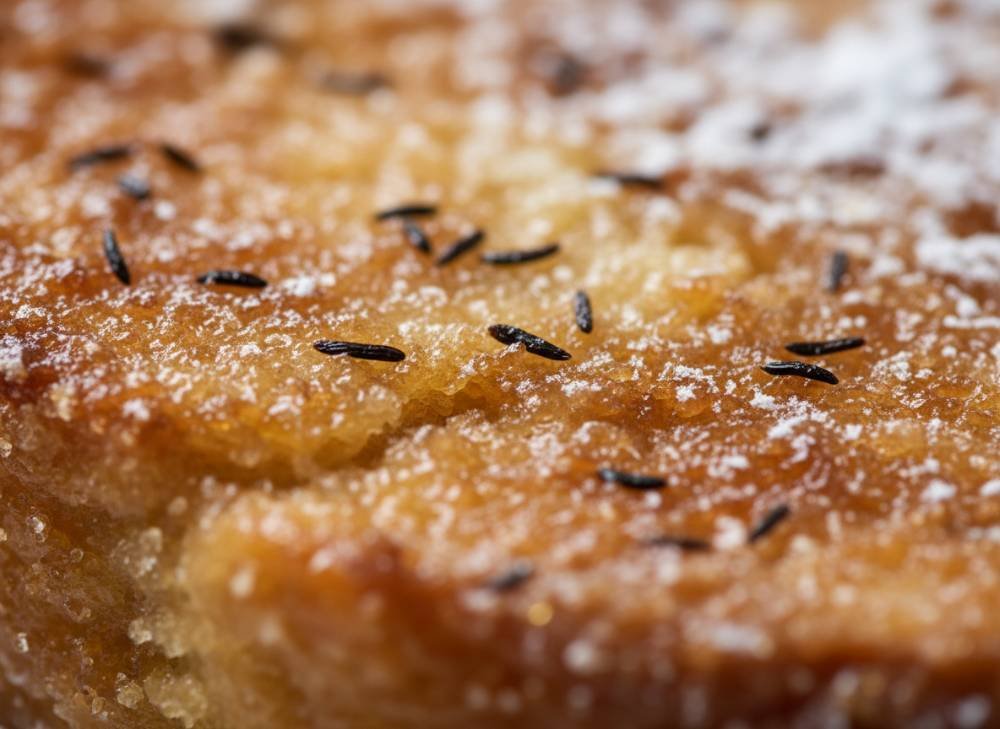
The taste is a delicate balance of buttery richness and floral vanilla. Because the bread is soaked thoroughly, it develops a flavor reminiscent of a bread pudding or a custard tart, topped with a thin, crackling layer of caramelized sugar.
The texture is the true star of the show. A perfect Pain Perdu must have two distinct layers: a crispy, golden-brown exterior that has been seared in butter, and a soft, pillowy, almost “trembling” interior that melts on the tongue. By using thick-cut brioche or stale farmhouse bread, you achieve a structural integrity that lighter breads simply cannot offer.
🍞 Recette : Le Pain Perdu à la Vanille Traditionnel
Ingrédients :
- 8 thick slices of Stale Brioche or Farmhouse Bread (Pain de Campagne), about 2cm thick.
- 3 large fresh Eggs.
- 250 ml Whole Milk (Lait entier).
- 100 ml Heavy Cream (Crème liquide) for extra richness.
- 50 g Granulated Sugar (plus a little extra for sprinkling).
- 1 fresh Vanilla Bean (or 1 tsp of high-quality vanilla extract).
- 40 g Unsalted Butter (for frying).
- A pinch of fine Sea Salt.
- Optional: Fresh berries or maple syrup for serving.
Instructions
- Prepare the Custard: In a wide, shallow dish (large enough to fit two slices of bread), whisk the eggs and sugar together until slightly pale.
- Infuse the Milk: Scrape the seeds from the vanilla bean and add them to the milk and cream. Whisk this mixture into the eggs along with a pinch of salt. The salt is crucial as it enhances the sweetness and the vanilla notes.
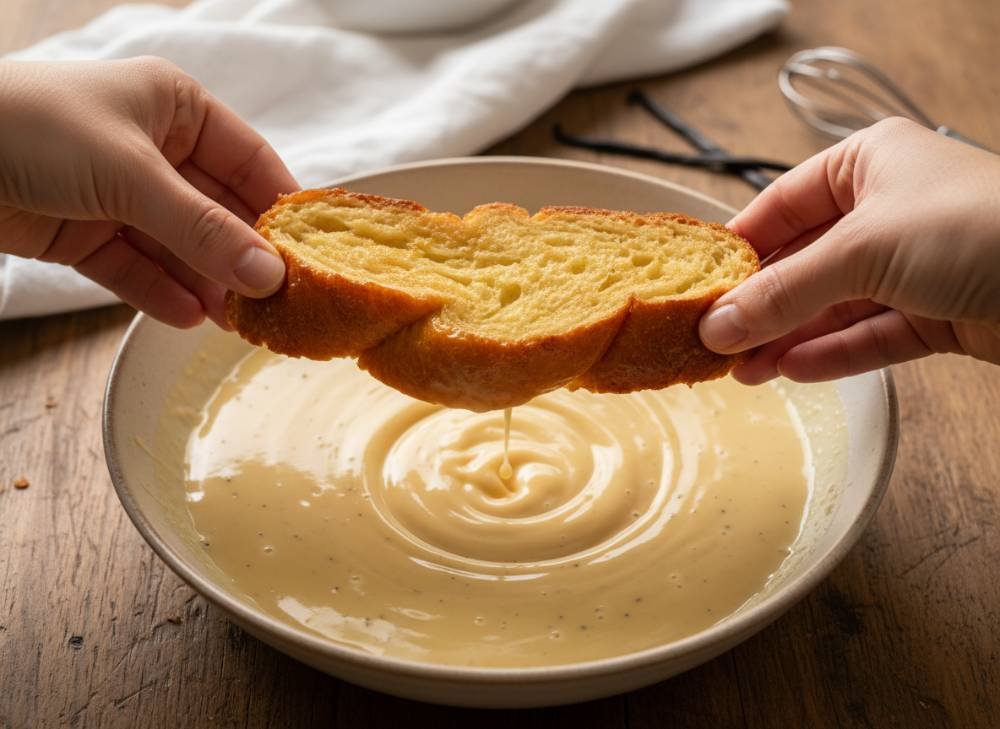
- The Soaking (The Secret Step): Place the slices of stale bread into the custard. Tip: If the bread is very dry, let it soak for about 2 minutes per side. It should feel heavy and saturated but not so soggy that it falls apart.
- Heat the Pan: In a large non-stick skillet, melt half of the butter over medium heat. Wait until the butter stops foaming and begins to smell slightly nutty (beurre noisette).
- The Caramelization: Carefully lift the bread slices from the custard, let the excess drip off, and place them in the pan. Do not overcrowd; cook in two batches if necessary.
- The Sear: Cook for 3 to 4 minutes on the first side. Before flipping, sprinkle a tiny bit of extra sugar on the uncooked top side. Flip the bread and cook for another 3 minutes until both sides are deeply golden and caramelized.
- Final Touch: The bread should puff up slightly in the center as the eggs inside cook, creating that “soufflé” effect.
- Service: Serve immediately while hot.
Conseils de Service et de Conservation
- Service: Pain Perdu is best served warm. For a truly French experience, serve it with a dollop of crème fraîche or a sprinkle of cinnamon sugar. To keep it healthy, top it with an abundance of fresh seasonal fruits like raspberries or sliced peaches.
- Conservation: While it is best enjoyed fresh from the pan, you can store cooked slices in the fridge for 24 hours. Reheat them in a dry pan over medium heat to restore the crispiness—avoid the microwave, as it will make the bread rubbery.
Helpful Tips (Astuces Utiles)
- The Bread Choice: The secret to the best Pain Perdu is stale bread. If your bread is fresh, it will absorb too much liquid too quickly and become mushy. If you only have fresh bread, toast the slices lightly in a low oven for 10 minutes to dry them out first.
- Don’t Rush the Heat: If the pan is too hot, the sugar will burn before the custard inside the bread has a chance to set. Medium heat is your best friend here.
- The Vanilla: Using a real vanilla bean makes a world of difference. Once you’ve scraped the seeds, put the empty pod in your sugar jar to make homemade vanilla sugar!
Frequently Asked Questions (FAQ)
- Q: Can I use skim milk?
- A: You can, but the result will be less creamy. Whole milk and a touch of cream provide the “luxury” texture that defines authentic French Pain Perdu.
- Q: Why did my bread fall apart?
- A: Either the bread was too fresh/soft, or you soaked it for too long. Stick to thick-cut, sturdy breads like Brioche, Challah, or Sourdough.
- Q: Can I make this vegan?
- A: Yes! Replace the eggs with a bit of cornstarch or mashed banana, and use oat milk and coconut cream. It won’t be “traditional,” but it will still be delicious.
Conclusion: Simple Elegance
Pain Perdu à l’Ancienne is the ultimate proof that French cuisine doesn’t need complex ingredients or alcohol to be spectacular. By treating “lost” bread with respect, some fresh eggs, and real vanilla, you create a healthy, comforting, and gourmet experience. It is a true essential for La Cuisine de Sophie!